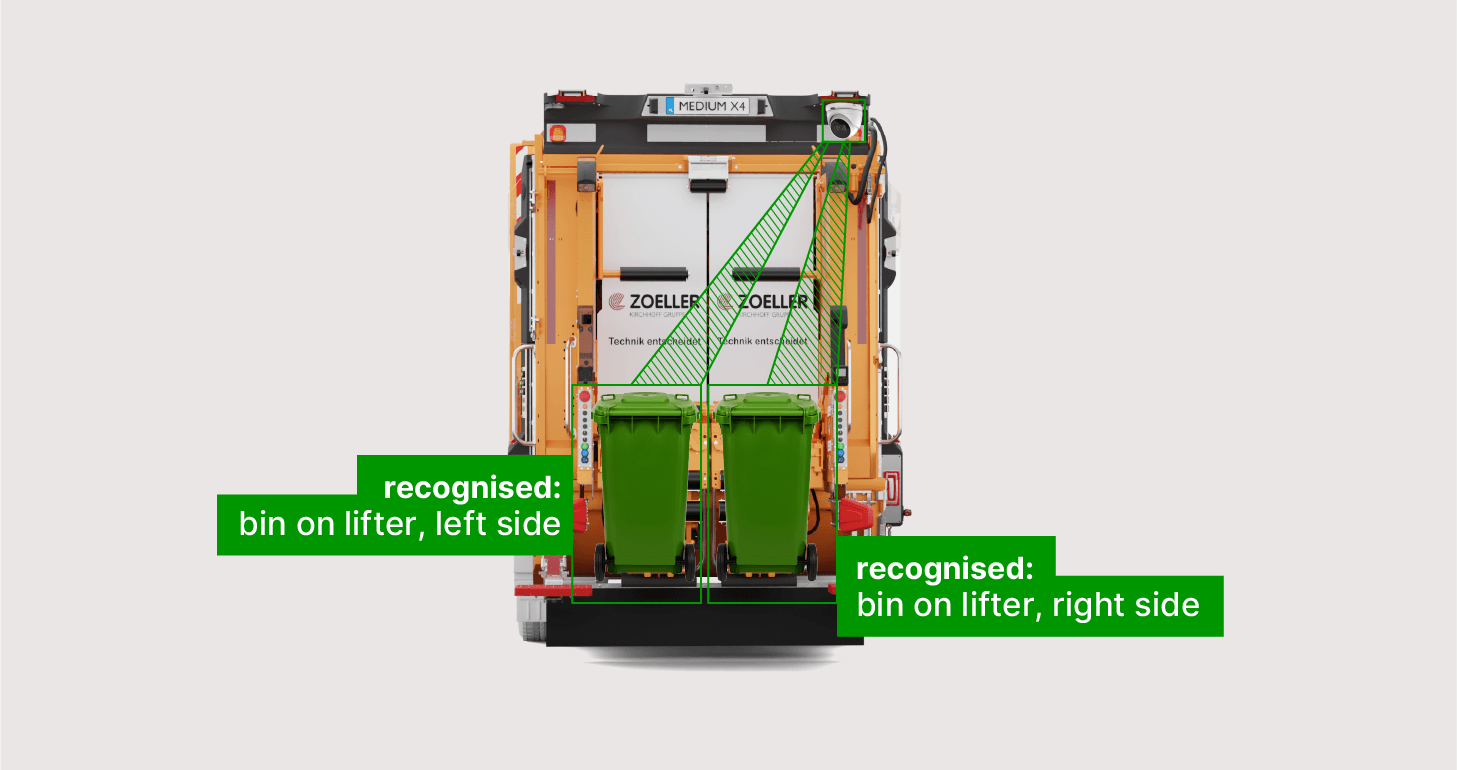
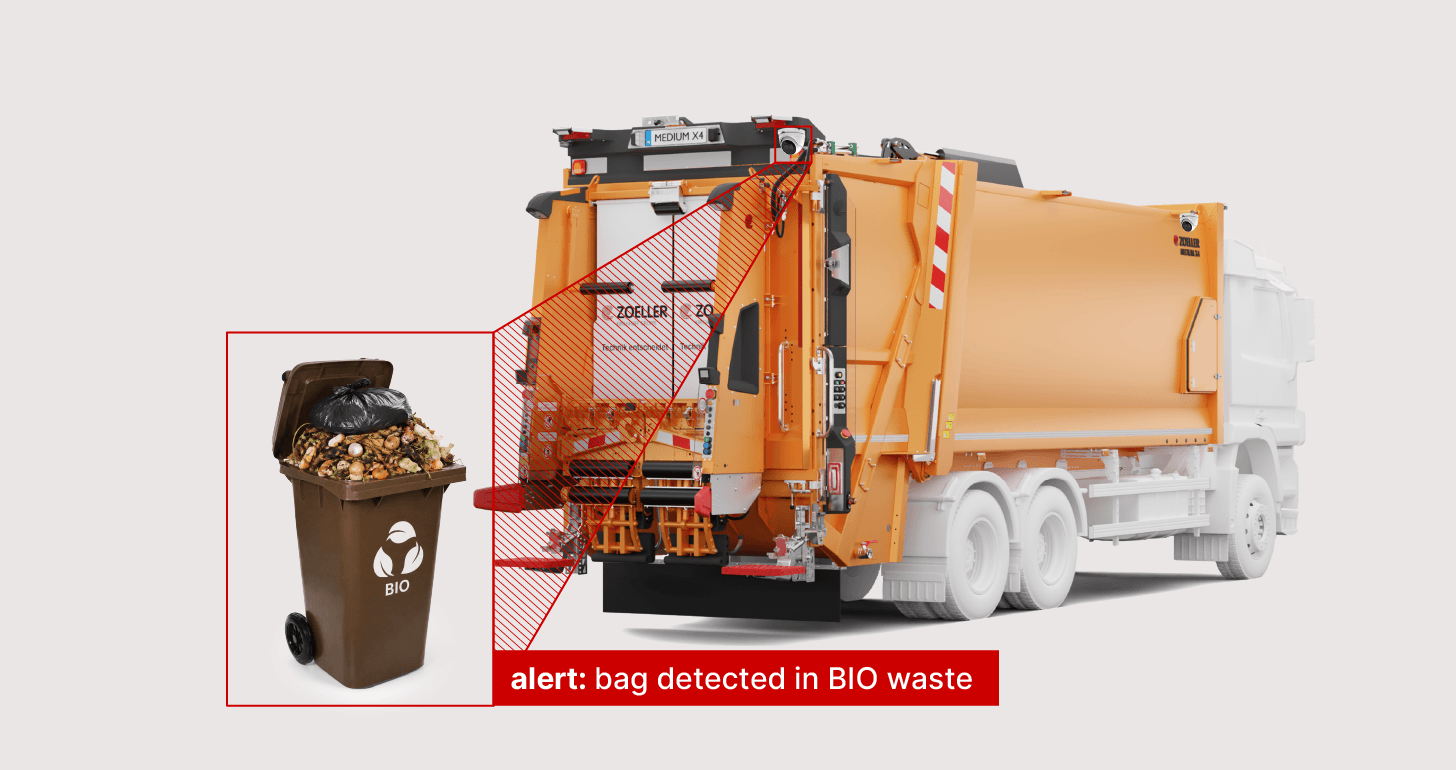
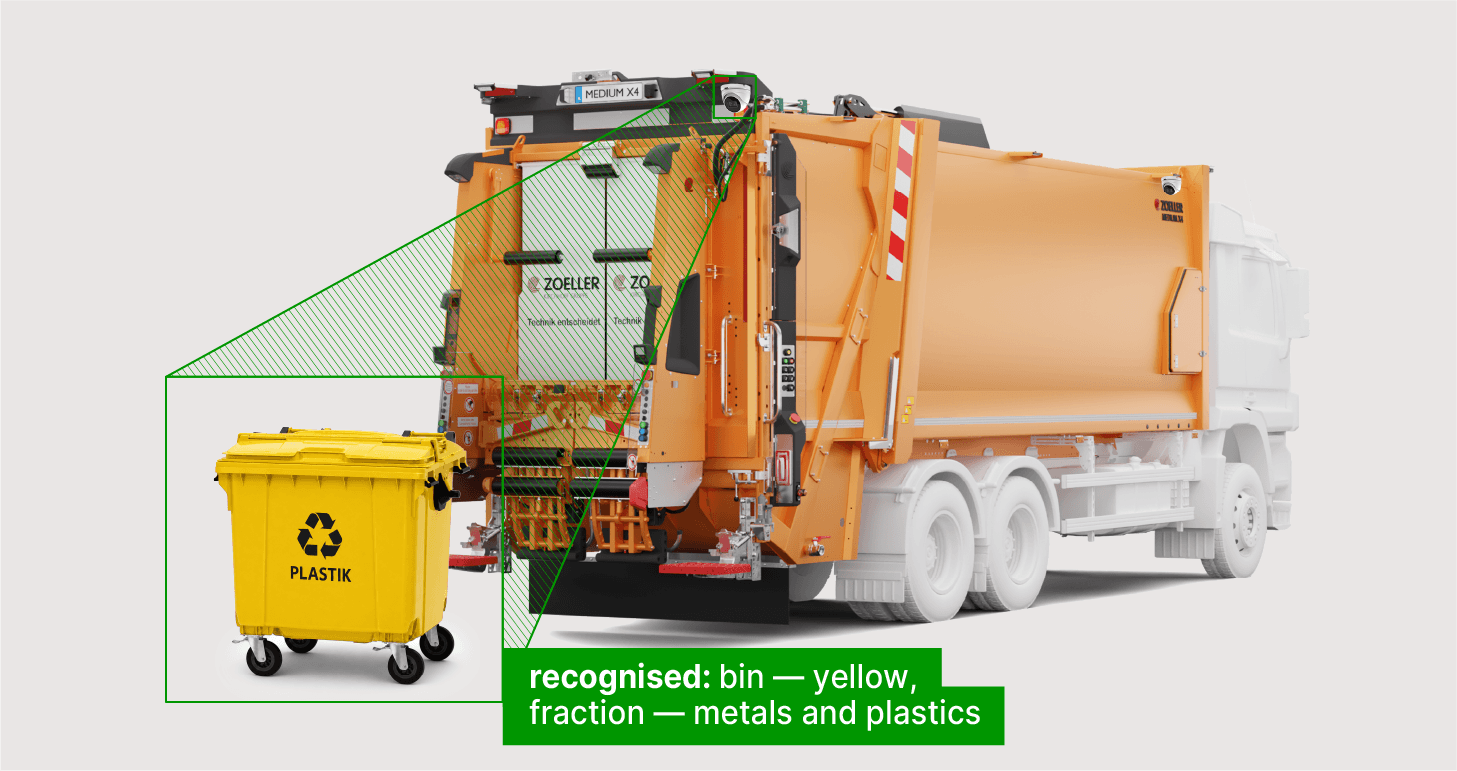
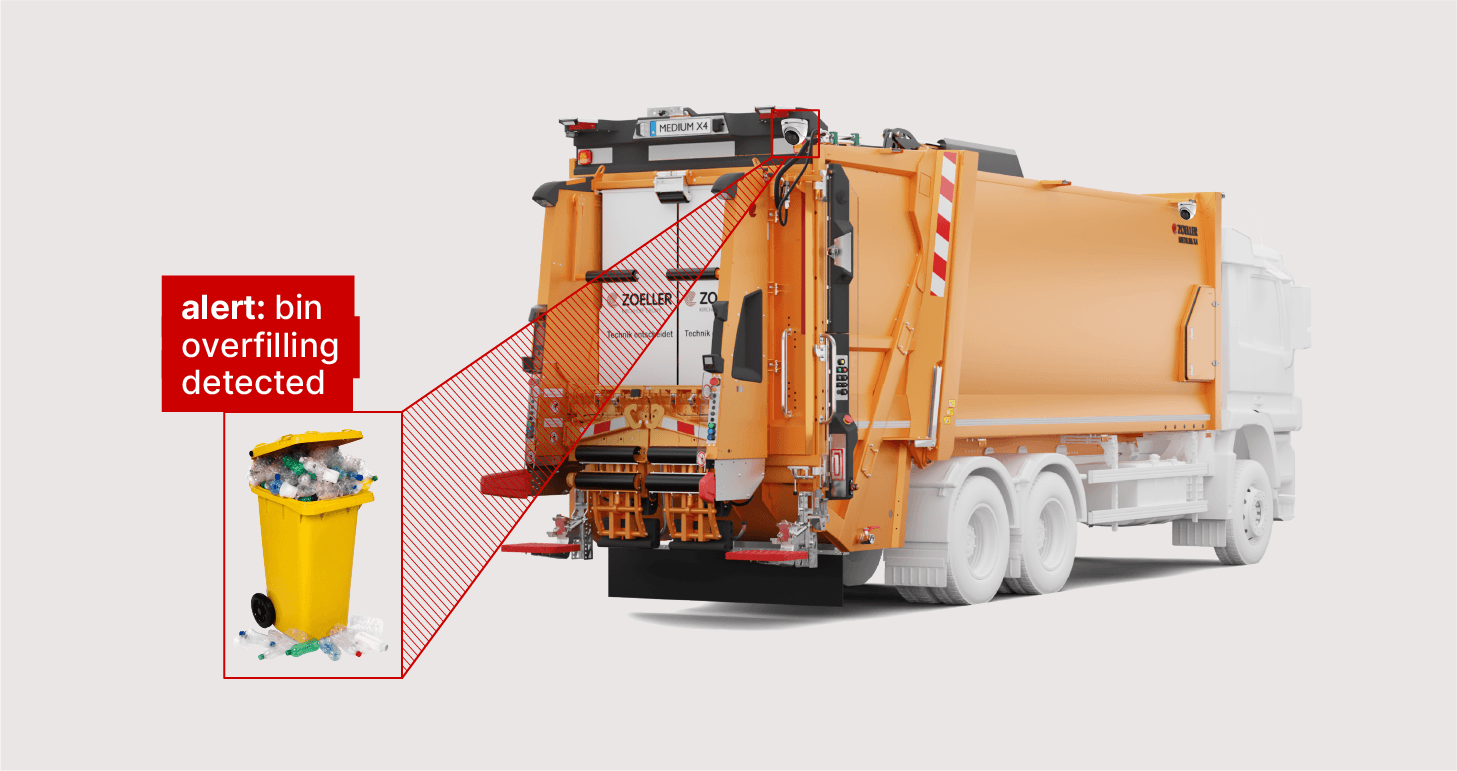
VisionAI evolves classic video monitoring toward an intelligent sensor. The camera is no longer used solely to record footage — combined with XTrack’s proprietary algorithms, it automatically recognises events, people, and assets, and interprets operational situations, turning footage into data that can be used directly in day-to-day waste collection management.
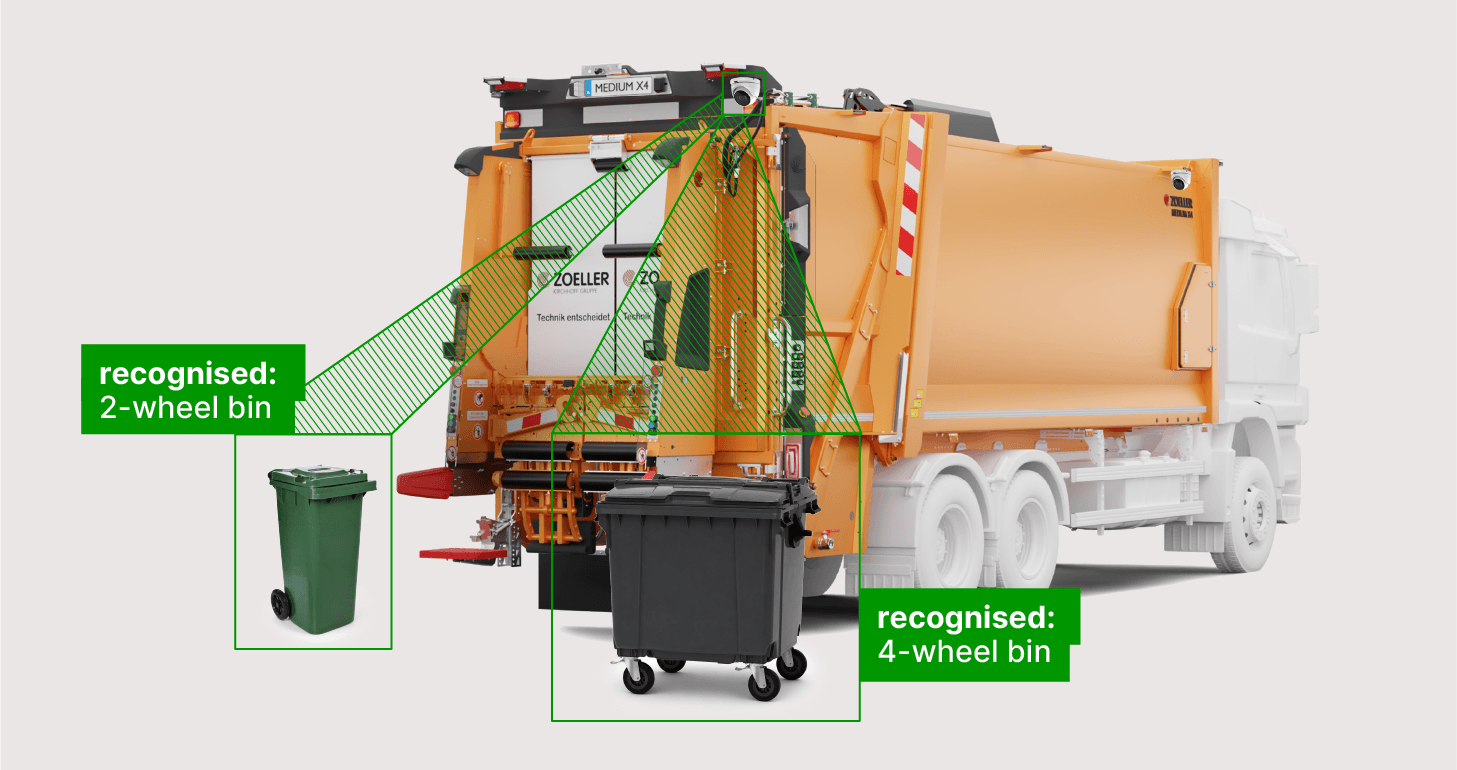
The solution addresses one of the industry’s key challenges: a scale of operations that can’t be effectively controlled manually. A single vehicle can perform hundreds, even over a thousand bin operations per shift. VisionAI automatically singles out the events among them that require attention, documentation, or a response.
See it in action
XTrack Vision AI on board a refuse collection vehicle
See how the onboard camera recognises operations, detects violations, and feeds the system with data — in real time.
RCV
9 XTrack VisionAI functions for refuse collection vehicles
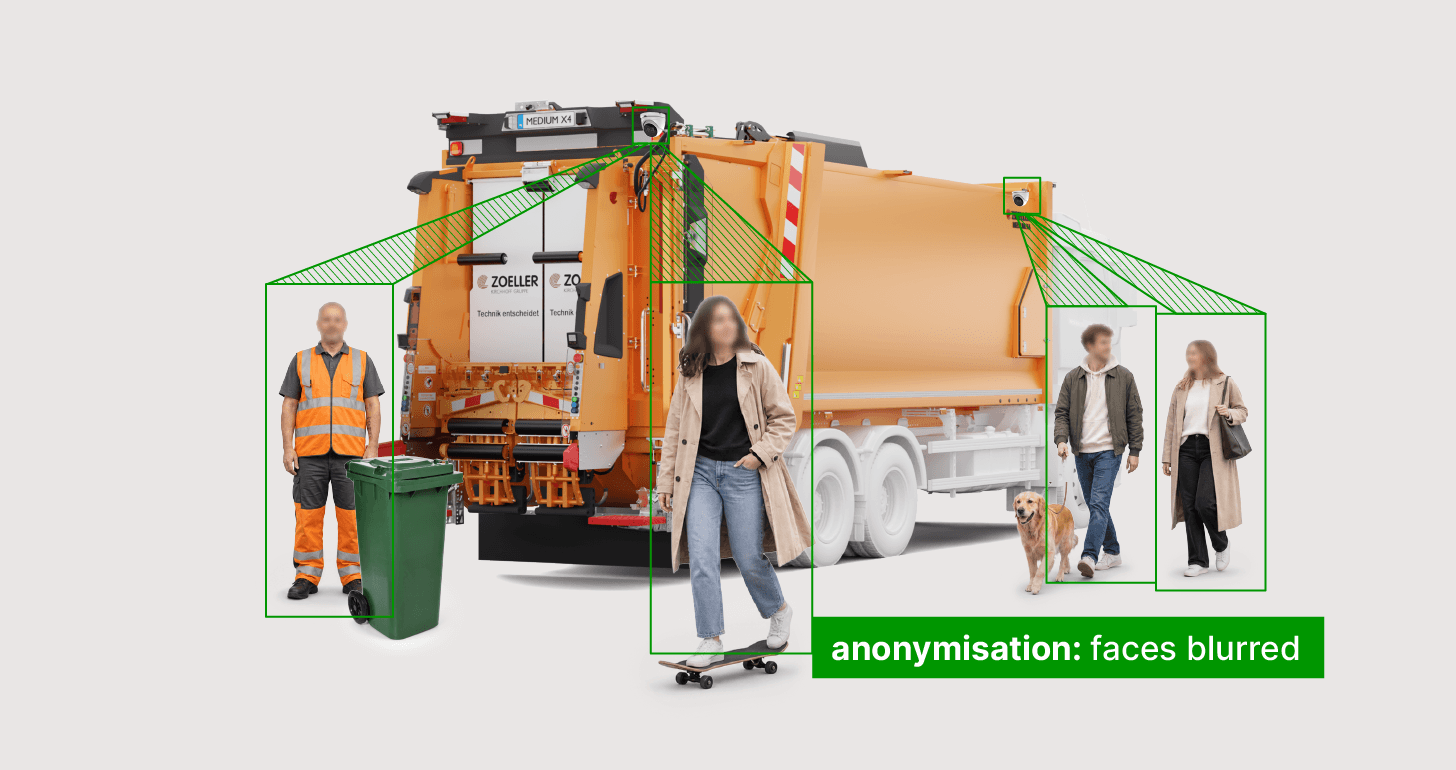
Automatic facial anonymisation in camera recordings
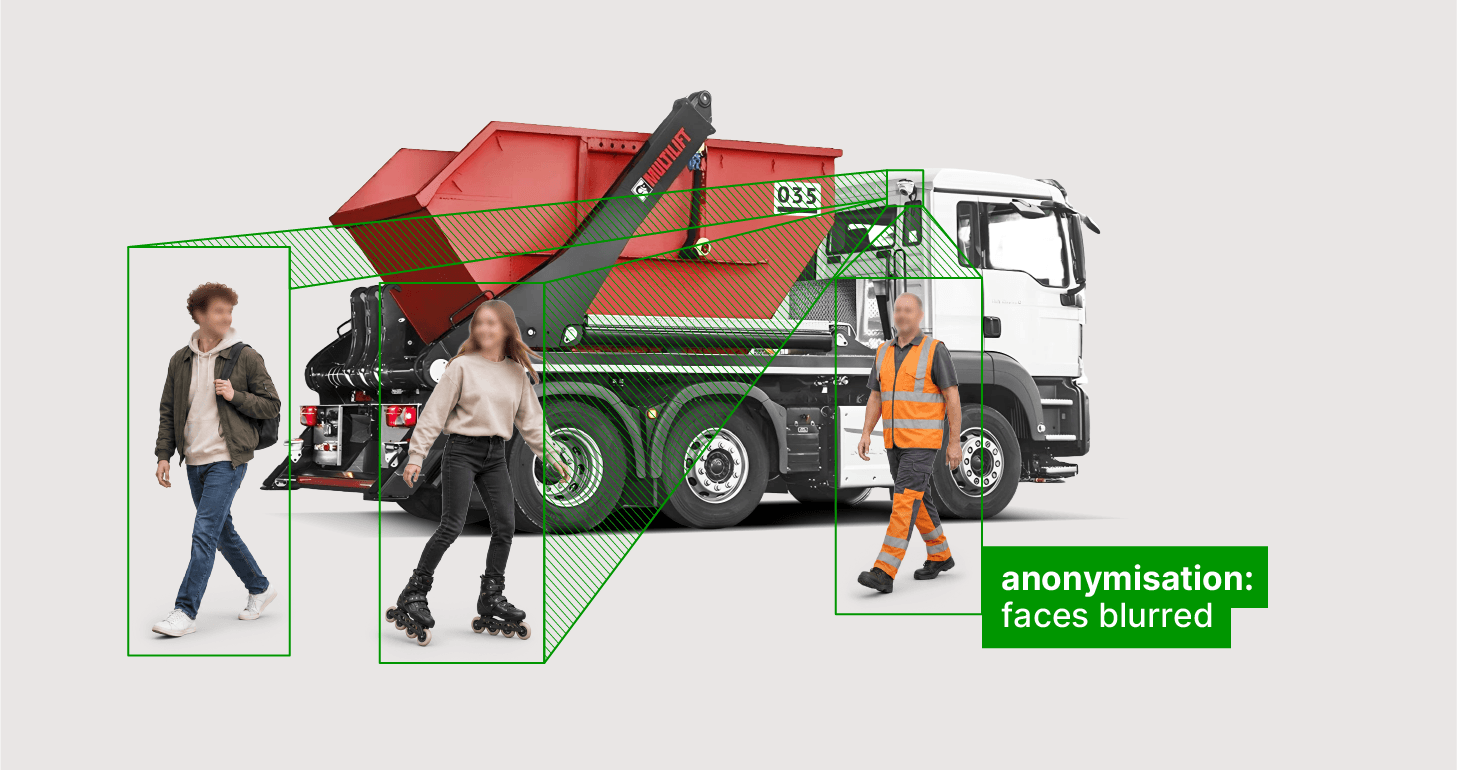
XTrack VisionAI automatically anonymises the faces of people appearing in onboard camera recordings — both during live viewing in the system and in exported material.
Automatic face detection and anonymisation
Real-time anonymisation during playback in XTrack WebX
Anonymization in material downloaded by users
Precise access management: recordings with anonymisation or in the original version
4 Vision AI functions for hooklift and skip-loader operators
A container is the only asset in this industry that a company knowingly lets out of its hands for several days. Vision AI turns the number on the body and the body’s activity into asset status.
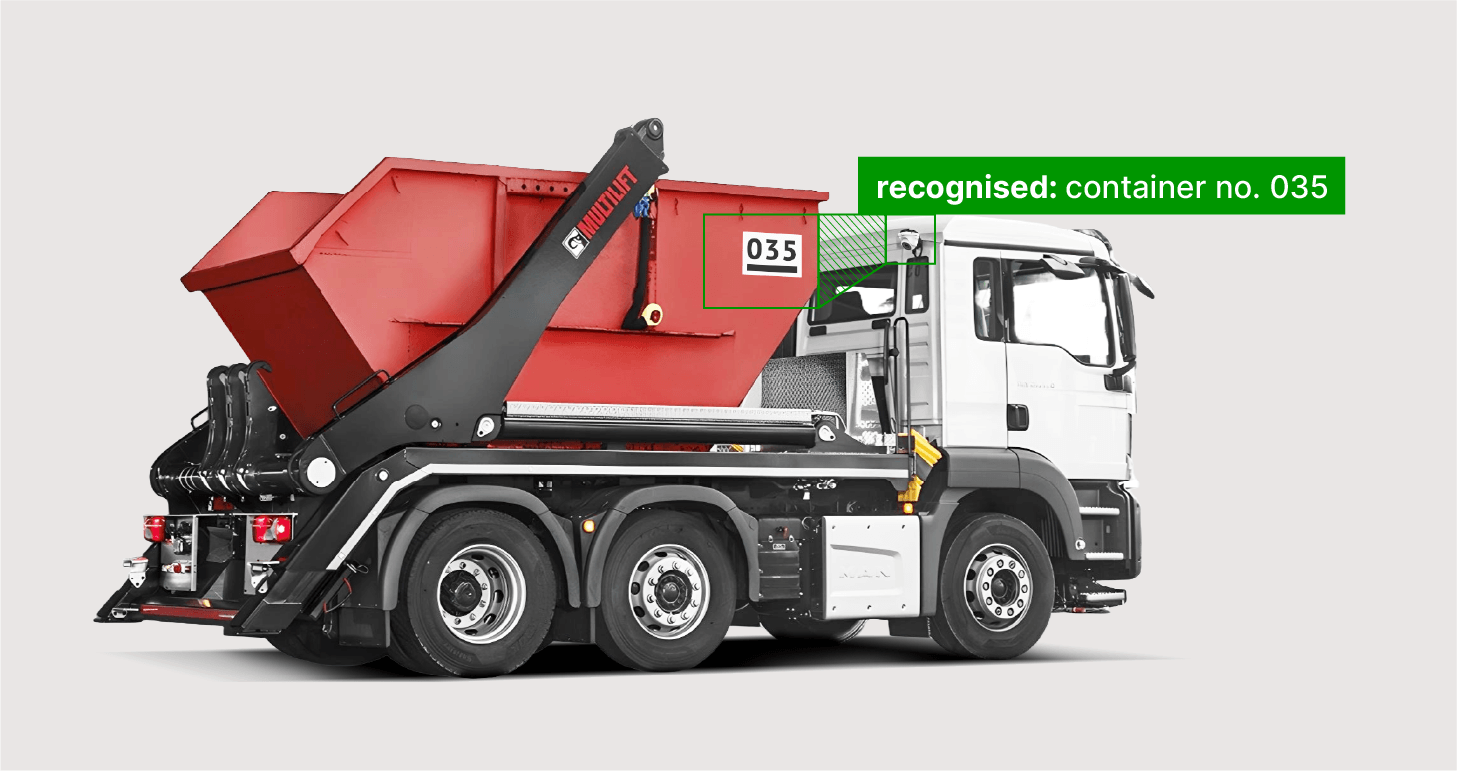
Container location based on XTrack Vision ID number reading via the camera
The camera reads the container number off its side and links it to the operation — no GPS locator on the container, and no manually copying numbers onto a waybill.
Up-to-date location of every container, including one that’s been sitting at a client’s site for a week
Alert on an idle, non-rotating asset instead of buying equipment that seems to be “missing”
Documented issue and return per number as a basis for enforcing liability for loss
Charging demurrage fees based on actual drop-off and pick-up dates
Operations
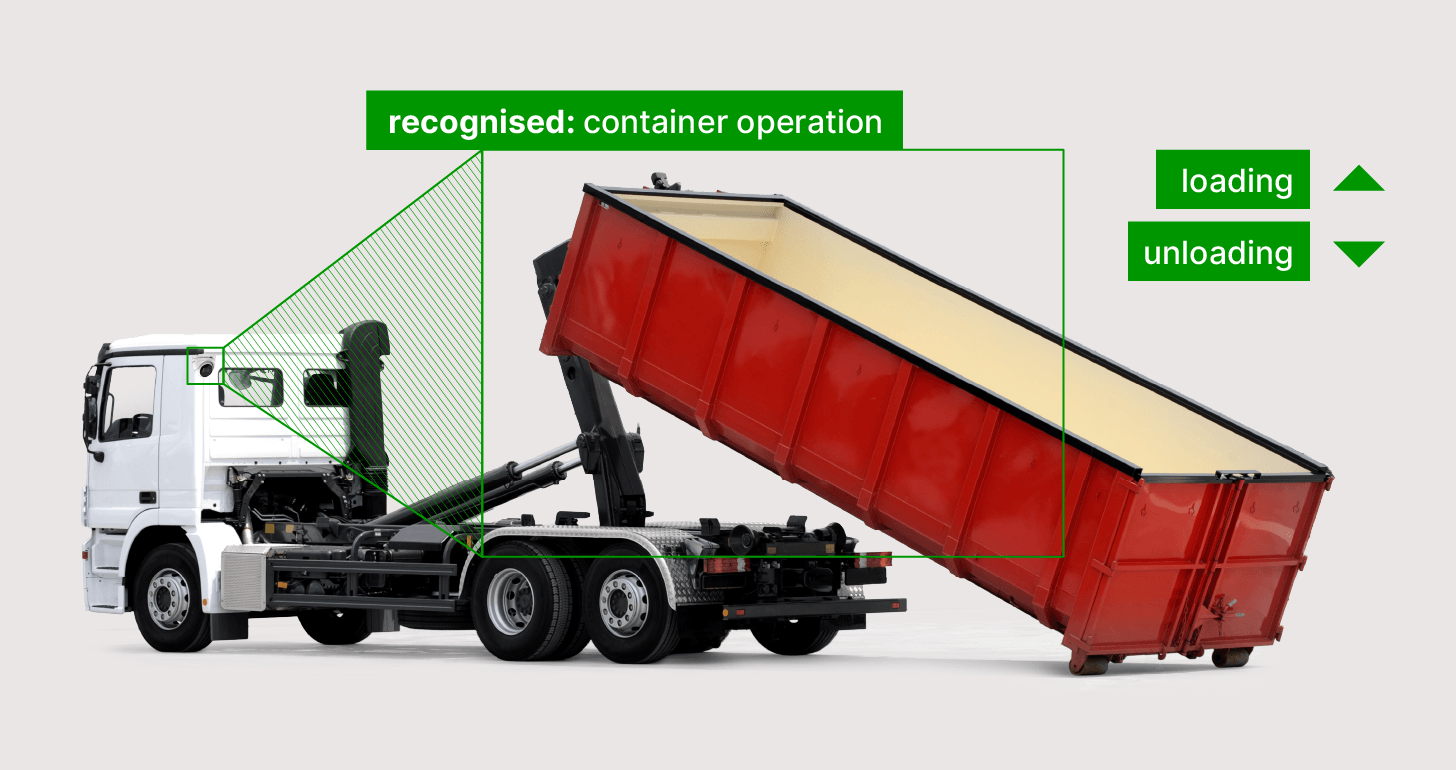
Detecting container loading and unloading
The system recognises the direction of the operation — drop-off or pick-up — and knows whether something is currently on the body.
Real-time body status: the dispatcher directs the vehicle that actually has a free frame
Detecting runs and containers outside the work order
Measured share of empty runs as a basis for reducing them
“While you’re at it” orders: containers in the field matched with vehicles already running empty
Regulations
Automatic image anonymisation
From a single recording you get, in parallel, both the full material and the anonymised one — no frame-by-frame editing.
Meets the anonymisation requirement set out in the tender specification, without extra tools or staff time
The evidentiary material stays unedited; you issue the anonymised version externally
Permissions determine who sees which version of the recording
Recording release measured in hours, not days — even with four streams from the vehicle
Diagnostics
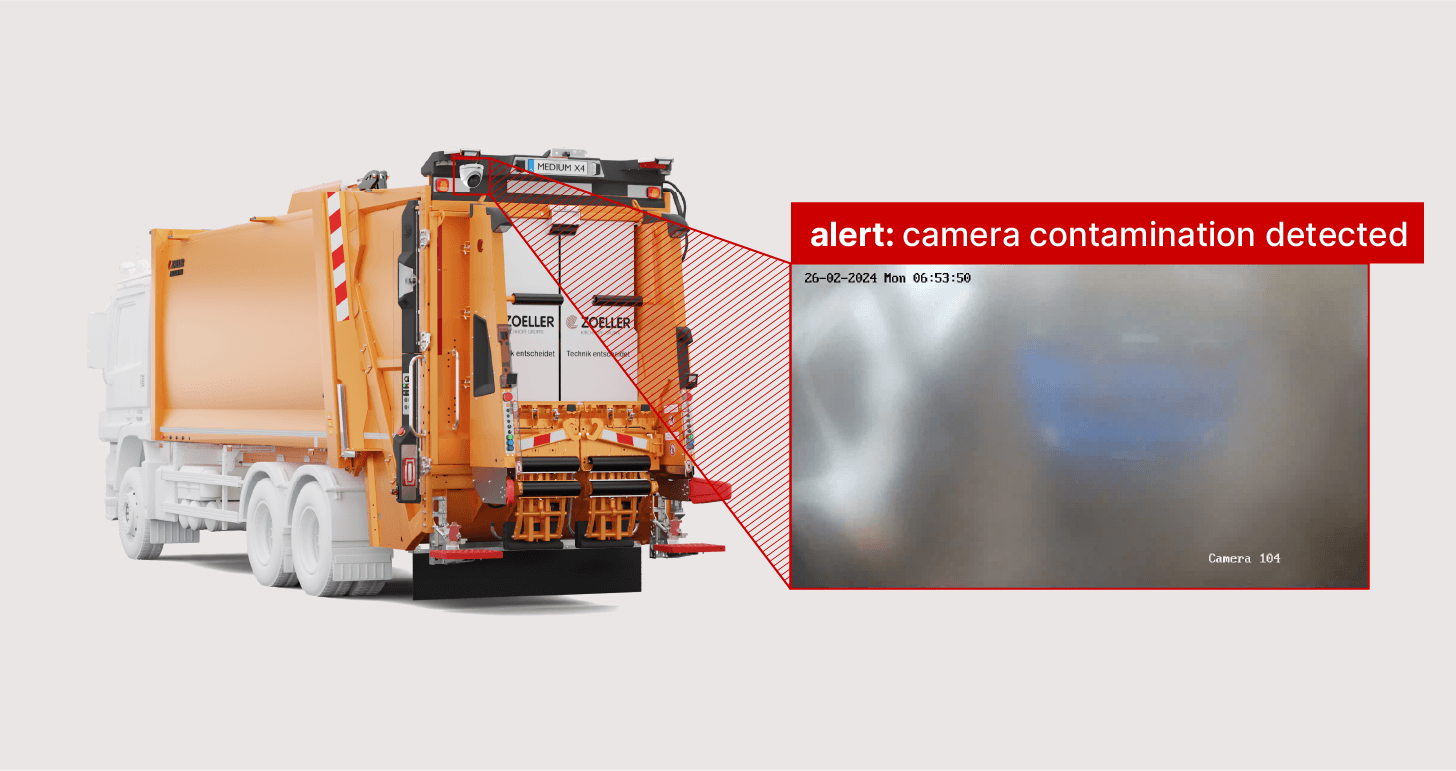
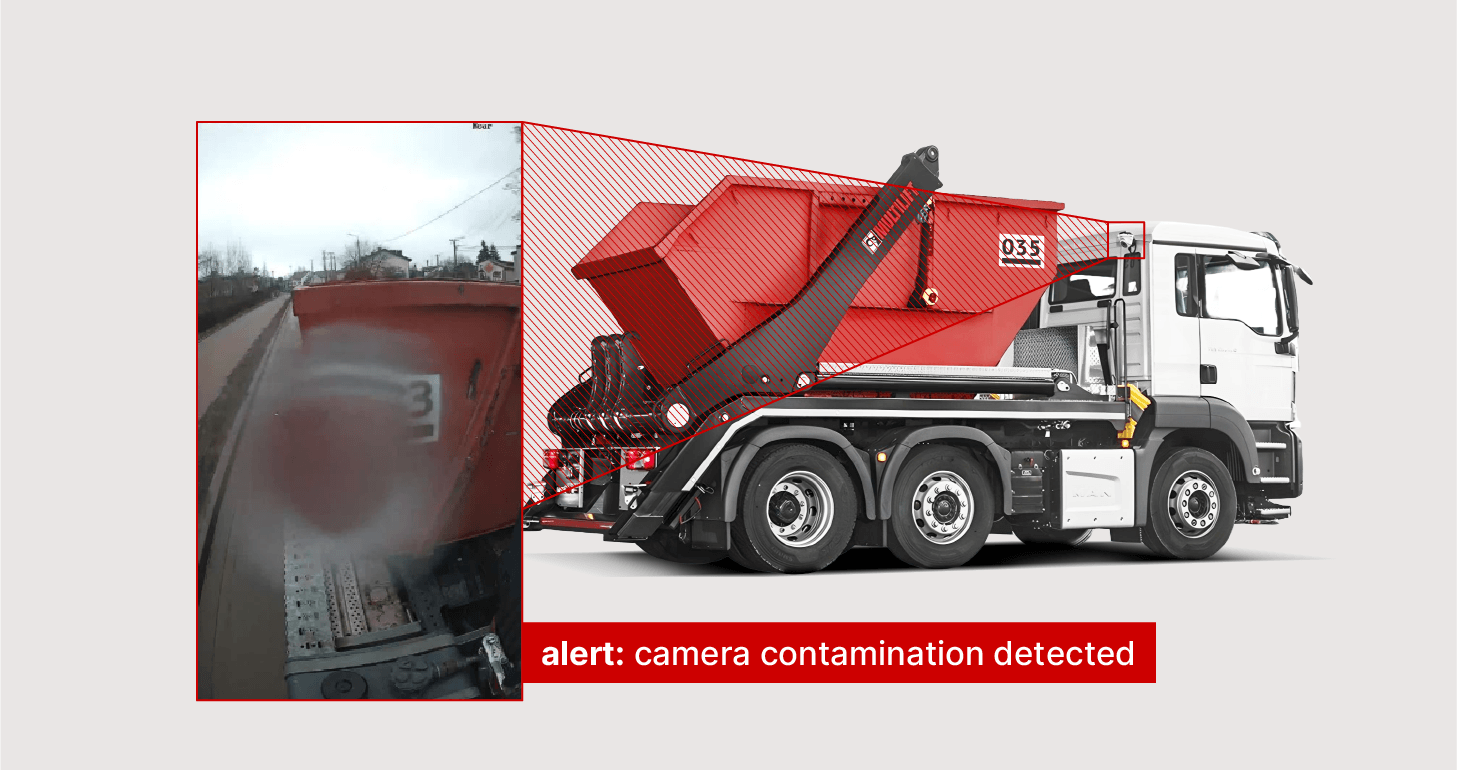
Camera cleanliness control
The system itself reports lens contamination or obstruction before the day’s footage loses its evidentiary value.
Clean the camera and continue the route instead of returning to base
Continuity of recording and operational data throughout the workday
You learn about the problem the same day, not at the complaint stage
XTrack Vision AI
One platform — data + video
No more searching through hundreds of hours of footage. Every event detected by Vision AI becomes an integral part of the vehicle’s telematics data — you filter it, sort it, export it, and build alerts on it exactly as you would with core GPS data. The system automatically links the selected video clip from the XTrack Cloud, and makes everything additionally available via the XTrack REST API to your billing/ERP systems.
FILTERING
SORTING
EXPORT
ALERTS
LINKED VIDEO
XTRACK CLOUD
XTRACK REST API
XTrack Vision AI
Benefits for the user
The common denominator of all XTrack VisionAI functions is automating tasks that traditionally require human work or additional devices and sensors. The key benefits are:
Automating operation control and reducing manual video footage review
Greater crew safety through automatic detection of defined hazardous situations
Lower risk of losing assets and more efficient use of the container fleet
Proof of service completion linked with the data for the specific event
Better control of the collection process and faster detection of irregularities
Logging container loading and unloading, and building a usage history
Simplified onboard infrastructure — a single camera with AI algorithms can perform some of the functions that previously required additional devices and sensors
Case studies
Cases, law, and industry practice
See how every XTrack Vision AI function looks from the perspective of real legal requirements, tender specification provisions, and situations that occur on the route every day.
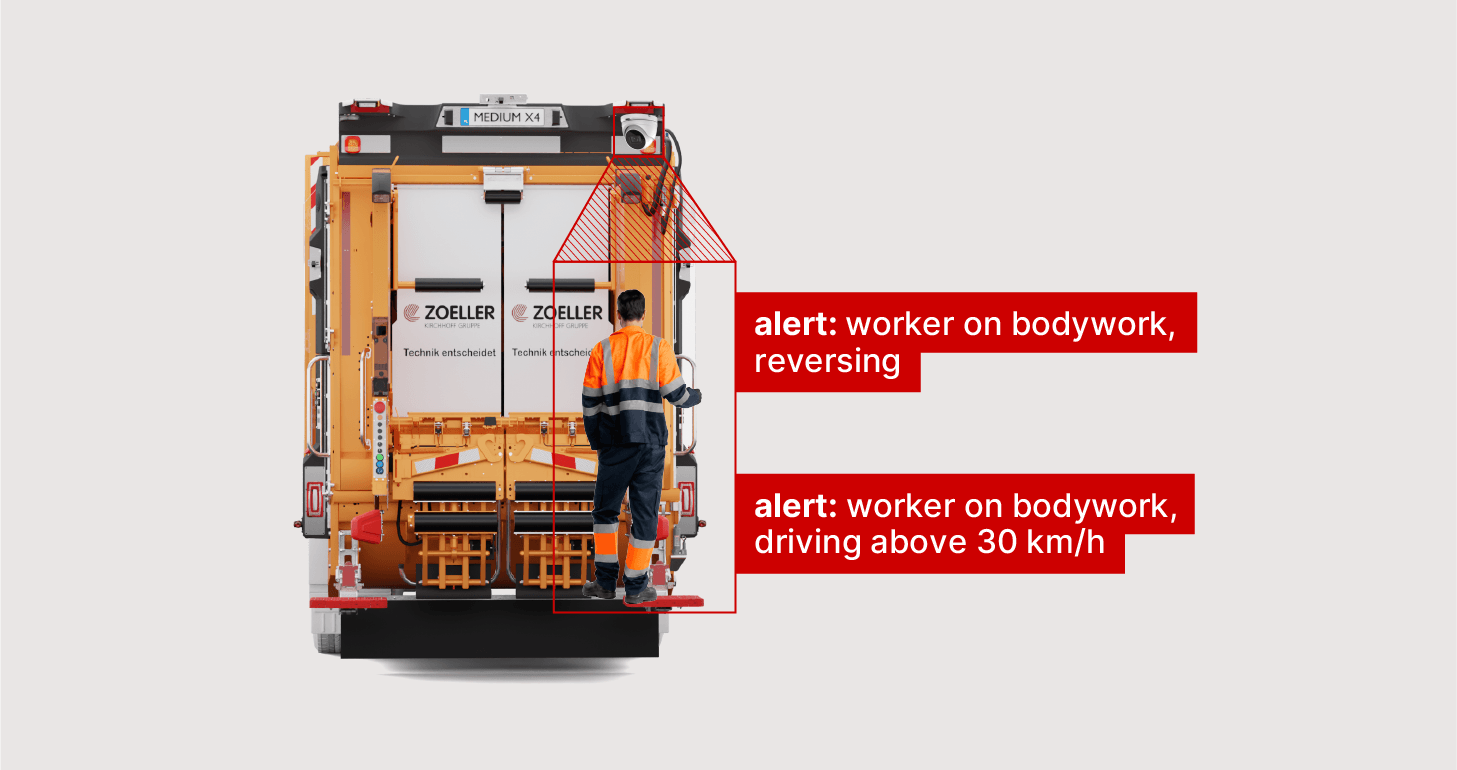
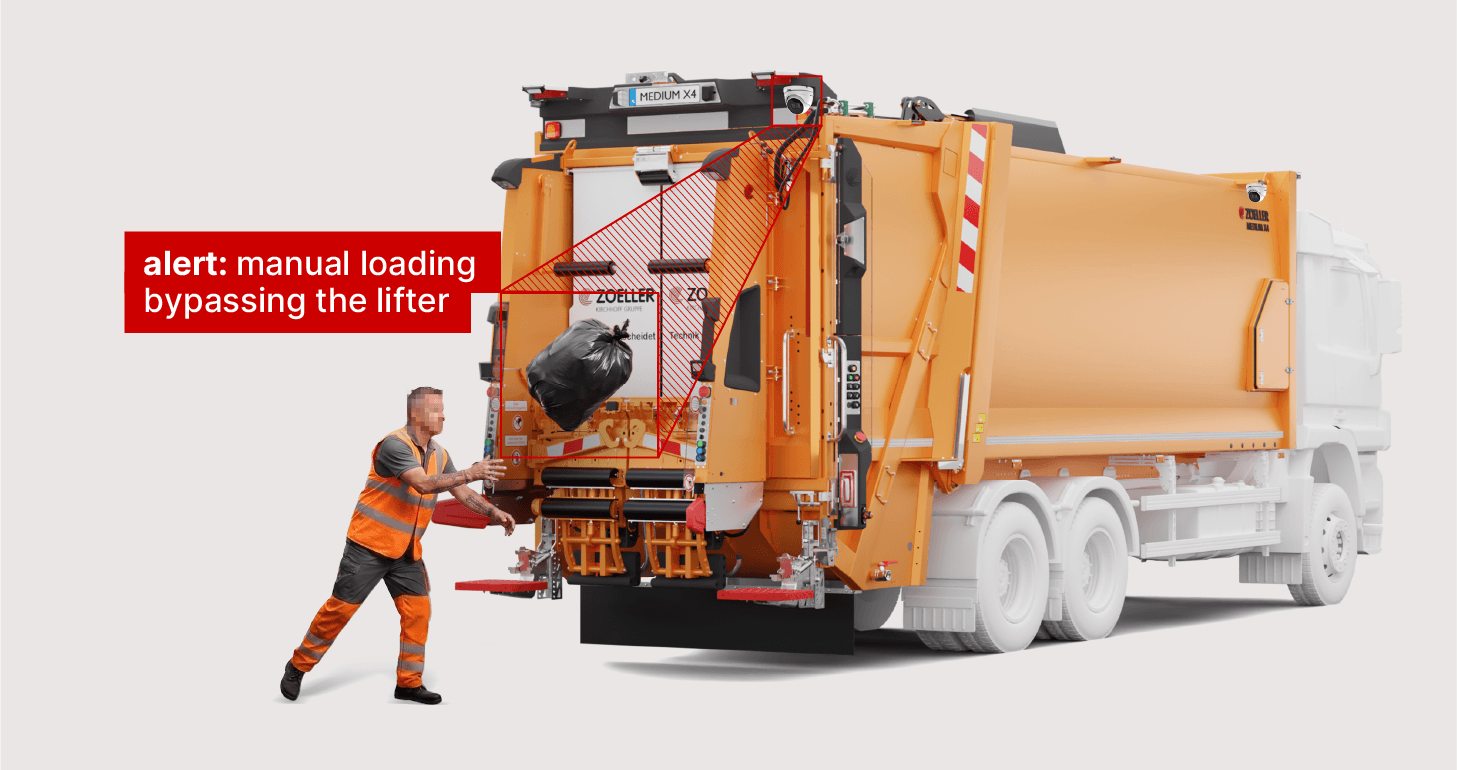
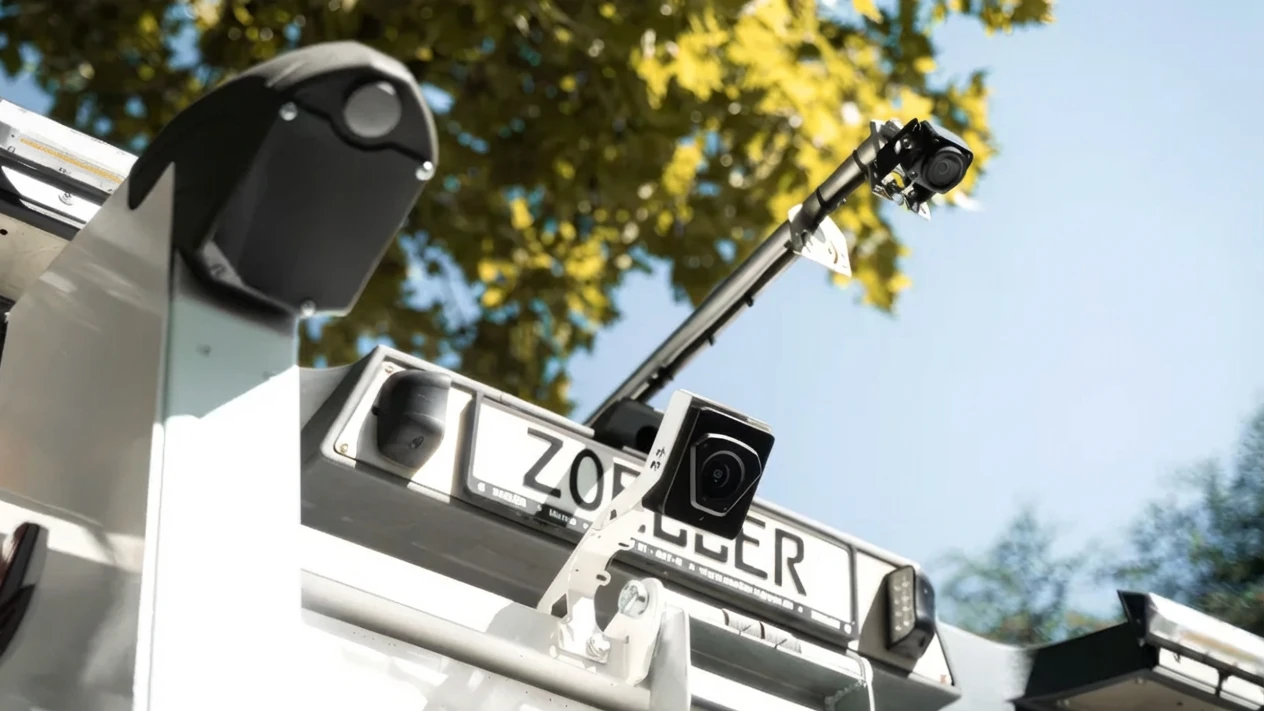
ZÖLLER-KIPPER GmbH, a European leader in the production of municipal vehicles, integrates XTrack VisionAI technology into its Z-CAM system, which autonomously protects operators in the lifter zone.