Waste bins, refuse trucks, hooklifts
The ABC of Radio Frequency Identification (RFID)
RFID identification is a process that uses three elements. The first is the RFID chip (tag) that is permanently attached to the identified container. The next element is the vehicle equipment, which includes RFID antennas. The third component is the IT system, which contains a database of waste collection points (WCP), the containers at those points and the RFID tags (chips) associated with each container, each with a unique, non-repeatable number.
How does RFID identification of bins work?
When a container is collected, the RFID identification antenna on the vehicle sends a radio wave to the RFID tag. The energy from this wave powers the electronics embedded in the RFID chip. The tag then sends a unique, fixed code stored in its memory back to the RFID antenna. This code is then compared with the IT system’s database, which confirms that the task has been completed and simultaneously records the information in the history of the vehicle, the waste collection point (WCP) and the container.
Standardisation of RFID identification for refuse trucks
The European Committee for Standardisation’s guidelines for the identification of containers by refuse collection vehicles are detailed in the DIN 14803:2020 standard. The standard specifies RFID LF (below 135 kHz) as the required operating frequency for the RFID identification system. The required RFID LF band means the use of equivalent frequencies of 125 kHz and/or 134 kHz. For the first frequency, the standard is 125 kHz unique. For the second, it is 134 kHz FDX and 134 kHz HDX. The document also mentions other bands such as 13.56 MHz (commonly used for NFC) and 2.45 GHz (used in WiFi). UHF technology (band starting at 860 MHz) is not recommended for garbage trucks according to DIN 14803:2020.
Why is RFID LF required for garbage truck identification?
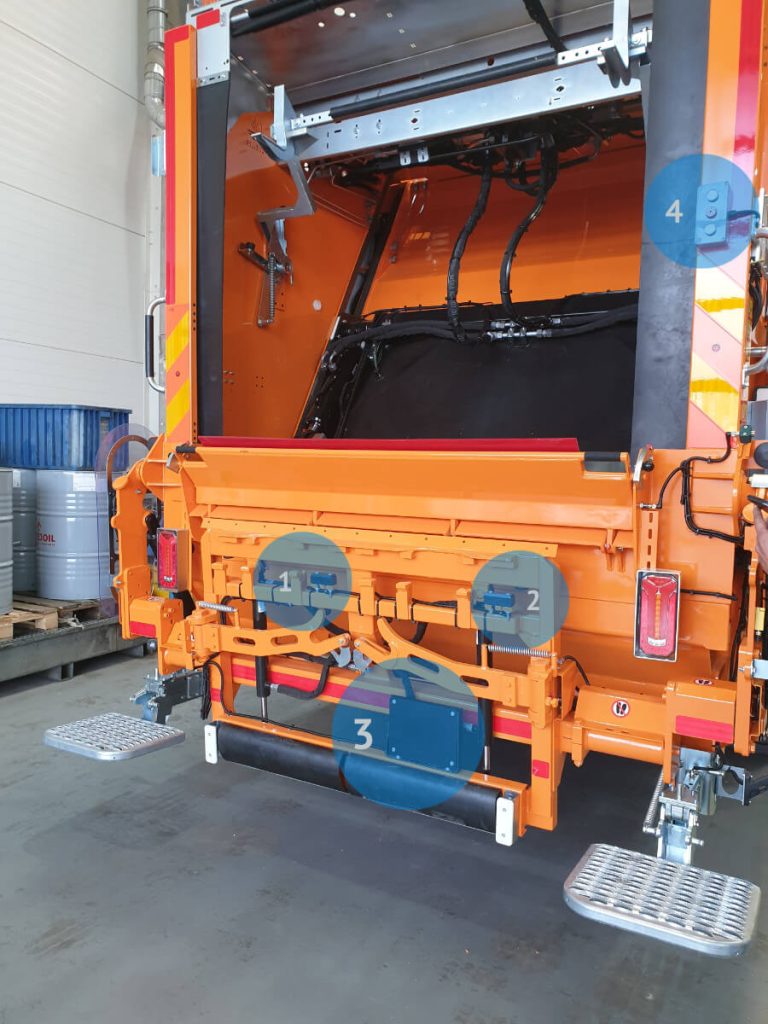
The characteristics of the RFID LF band provide an optimum working reading range of approximately 20 cm, which is resistant to weather conditions. Each lifted container is identified by a separate antenna (depending on the side and the lifting method – comb/bar or arms). This ensures 100% effectiveness in identifying the bin and eliminates accidental readings when moving bins close to the vehicle and readings from tags that may be in the waste. Separate identification of bins using dedicated antennas is also critical when integrating RFID identification for refuse trucks with dynamic scales – only in this way can on-board systems accurately match the weight of waste to a specific, identified container (waste producer).
Benefits of implementing RFID identification
Container identification is the only effective method of confirming the collection of a specific fraction from a specific container at the Waste Collection Point. Complemented by the integrated XTrack image registration system, it provides a complete insight into the handling process at the Waste Collection Point
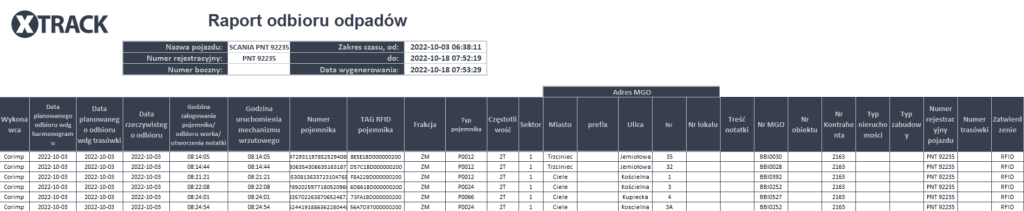
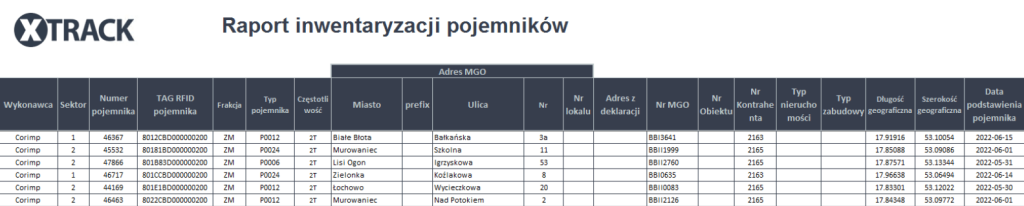
During the implementation of RFID identification, the RFID tag number of the container is assigned to the waste fraction received, the waste producer and the location of the container. This provides knowledge of the actual status company’s assets in the field.
The built-in chip control reading mechanism in RFID identification systems protects the crew from handling errors, such as picking up a container that does not match the fraction being loaded into the body chamber (waste contamination). If the body has been equipped by the manufacturer with a ‘lift STOP’ function, the RFID identification system can block the loading mechanism from emptying the identified bin.
In conclusion, the unique identification of the waste producer (especially when combined with a weighing system on the vehicle) allows the collection of waste from containers covered by different contracts with a single vehicle on the same route.
The ABC of Radio Frequency Identification (RFID)
The built-in chip control reading mechanism in RFID identification systems protects the crew from handling errors, such as picking up a container that does not match the fraction being loaded into the body chamber (waste contamination). If the body has been equipped by the manufacturer with a ‘lift STOP’ function, the RFID identification system can block the loading mechanism from emptying the identified bin.
In conclusion, the unique identification of the waste producer (especially when combined with a weighing system on the vehicle) allows the collection of waste from containers covered by different contracts with a single vehicle on the same route.
RFID identification for garbage trucks in XTrack
Thanks to the full implementation of the guidelines of Standard 14803, regardless of whether you are identifying containers with a single or multi-chamber vehicle, you can use the same set of antennas on a route to simultaneously identify containers with different RFID tags, both 125 kHz and 134 kHz. This solution is particularly advantageous if your fleet has different contracts and/or if you have purchased containers with RFID tags from another operator.
What if you have implemented the RFID identification system, but your working methods do not allow you to plan routes for individual fractions and vehicles? No problem. For each inventoried container, the XTrack system will automatically generate the task after collection, confirm its execution and keep the information in the vehicle history and in the waste collection point handling records.
You can purchase RFID chips and devices for the on-board terminal/inventory role on the open market, ensuring that the cost of implementing and developing the RFID system is always at an optimal level.
Container identification compliant with CleANOpen
Our RFID identification solution for refuse trucks is fully compliant with the CleANOpen industry standard. This means that if there is a business need, data from the XTrack on-board systems will be available to external CleANOpen-compliant providers.
Data from the container identification system is accessible through documented XTrack APIs, aslo at the XTrack IT system level.
RFID identification for hooklift trucks
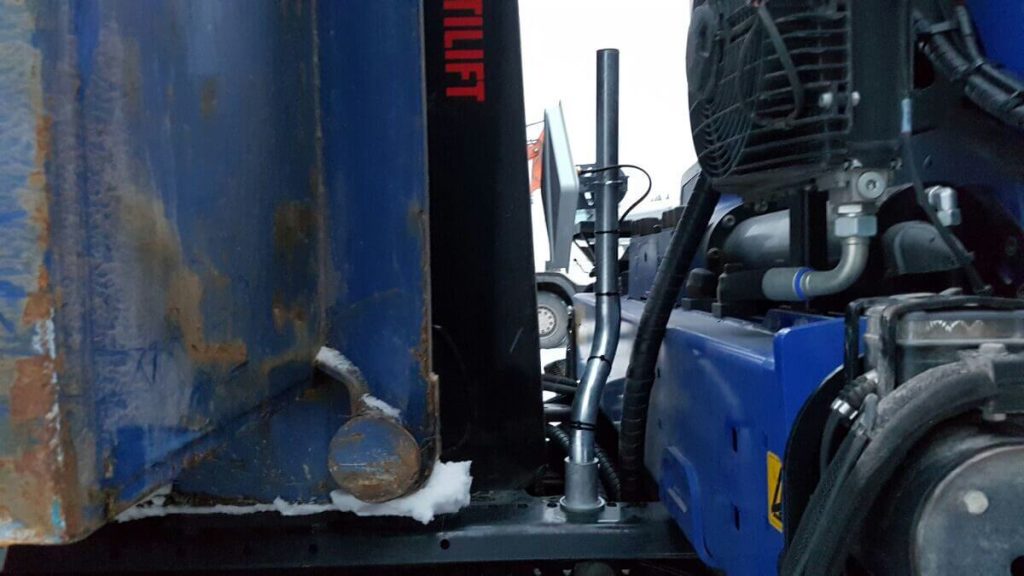
Identification for hooklifts can be both automatic, such as RFID for refuse trucks, and manual, through container identification using on-board terminals with RFID tag readers and the XTrack WorkMate application. These vehicles use the UHF band (typically from 860 MHz).
Our customers also use NFC RFID tags, especially for manual identification. In this case, any smartphone with an NFC reader can be used as a terminal/scanner. It is possible to combine both methods thanks to the availability of ‘combo’ tags on the market, i.e. UHF + NFC.
We can also integrate the UHF RFID identification system with on-board scales.
The ABC of Radio Frequency Identification (RFID)
Tip!
Do you use RFID identification solutions from other suppliers and want to use the purchased components on your vehicles and containers to implement the XTrack system?
Get in touch with us!