Industries
Waste management

Waste management involves operations carried out on a daily basis in the field, on a large scale and under pressure to deliver results.

Millions of operations a year, a dispersed infrastructure and a fleet of specialist vehicles require full control over processes. The coordination of crew work, ongoing supervision of service delivery and access to reliable operational data are of key importance. Effective management of the utilities sector relies on the integration of technology, logistics and documentation within a single environment.

Waste management
Common industry challenges
- Carrying out millions of waste collection operations annually across multiple locations
- Managing a fleet of specialist vehicles and an extensive range of machinery
- Coordinating the work of dozens of crews and hundreds of field staff
- Overseeing dispersed assets in the field (bins, containers, waste receptacles)
- Daily route planning and task allocation with ongoing communication with teams
- Multi-level documentation of service delivery and work quality
- Monitoring of vehicle and bodywork performance parameters
- Inventory and control of field resources
- Integration of data from multiple sources into a single management system
- Scalability of solutions and adaptation to tender and contract requirements
System

Integrated video monitoring - camera system with XTrack VisionAI technology
Field crew's working tools - on-board terminal with XTrack WorkMate app
GPS recorders with tachograph support
Weighing systems - automatic (CleANopen) and non-automatic
Monitoring of body and chassis parameters (CleANopen)
RFID bin identification (CleANopen)
Waste management
Other industries
Water and sewerage services
Day-to-day operations involve carrying out work at multiple sites simultaneously and continuously monitoring technical and logistical processes. It is essential to have real-time access to reliable operational data, which helps to coordinate activities in the field and at the technical support base. This is an environment in which integrated management systems form the basis of operational efficiency.
Fuel management
Fuel distribution is an operation that requires full control over supply chain logistics, product flow and the safe delivery of services. Every delivery must be carefully planned, documented and accounted for. Ongoing monitoring of the tanker fleet, fuel dispensing points and communication with drivers is of paramount importance. Consistent operational and cost data are key to profitability and the quality of customer service.
Construction
The implementation of the project requires full control over the work of machinery, teams and subcontractors, as well as constant monitoring of operating costs. Access to reliable operational data and records of work progress is of key importance. The integrated management environment enables real-time coordination of activities and optimisation of resource utilisation.
Road maintenance
This is an industry where rapid response, full accountability and the constant availability of a specialist fleet are essential. The performance of contracts must be documented in terms of the location, time and quality of the work carried out. XTrack provides tools for operational monitoring, activity planning and real-time cost control.
Agriculture
Large-scale farming is an operational activity spread across a wide area, requiring precise management of equipment, teams and working hours. Day-to-day work is carried out simultaneously across many areas and in various locations. The machinery in use includes expensive, specialised equipment and a wide range of additional tools. The smooth running of farms requires the coordination of people and resources in dynamic field conditions.
Waste management
Our solutions
Planning and delegating tasks
Management of the operational structure
Efficient setup of collection points for any number of contracts, management of locations and regionalisation of the operational area, and rapid migration of existing structures and schedules to the XTrack system.
Data-driven logistics
Organisation and monitoring of collection operations using a logistics tree and clear visualisation of data in tables and on a digital map.
Route planning in a map environment
Customised route planning with bulk assignment of collection points to regions, vehicles and routes using a ‘drag-and-drop’ method, and analysis of interdependencies between routes.
Planning based on historical data
Creating schedules based on actual operational data – average waste weights, bin types and waste fractions.
Bulk schedule management
Quickly assign collection schedules to vehicles and assets, and modify routes without having to edit individual waypoints.
Management of complex fleet operations
Support for multiple recurring and one-off routes, multi-compartment vehicles, and separate routes for bin collection and washing within a single schedule. The ability to test different logistics options and plan for holiday shifts.
Delegation and real-time communication
Two-way communication between dispatchers and drivers via on-board terminals using the XTrack WorkMate app, with dynamic assignment and transfer of orders between vehicles based on their current location.
Open system integrations
XTrack software integrates with external IT systems, devices and vehicles, enabling seamless data exchange and the creation of a cohesive operational environment.
Monitoring of assets and tasks
A scalable operating platform
The XTrack XT4 platform supports fleets of any size within a single system environment, regardless of the number of modules installed on the vehicles. The system does not require the creation of separate databases (e.g. for company branches) and provides an unlimited number of accounts for dispatchers, drivers and freight forwarders.
Full history of vehicles and assets
A single platform collects operational data and documentation for all of the company’s assets. The vehicle history includes GPS tracking, monitoring of the bodywork and chassis, data from weighing systems, information from on-board terminals (notes, photos, video) and data from the fuel management system based on the XTrack fuel terminal.
Monitoring of chassis and bodywork parameters
Operational parameters are recorded via the FMS interface or a dedicated CAN module, using both factory-fitted and additional XTrack sensors. The system also monitors the operation of specialist equipment via application interfaces and a CAN bus compliant with the CleANopen standard.
Integrated weighing systems
Automatic on-board scales for RCVs enable waste to be weighed with a resolution of 1 kg without affecting the crew’s efficiency. The system also supports non-automatic scales for container and box-body vehicles. Only at XTrack! Two types of scales can be fitted to a single vehicle!
Operations tracking
Progress on routes and task completion is monitored on an ongoing basis via a dedicated operational interface. Crews provide feedback online via a single logistics system, including progress updates, photographic evidence and field notes.
Integrated video monitoring
Video footage and photos from the XTrack video recorder (up to 4 FHD/HD cameras, min. (1920×1080, up to 25 fps) are automatically transmitted in real time. The recordings are combined with telematics data and parameters relating to order fulfilment and vehicle operations.
Monitoring of field assets
The system displays the location of waste bins on a map and analyses their historical usage (containers, bins, underground bins). Tracking does not require active GPS transmitters; it is possible to use high-performance XTrack devices with a built-in battery.
Diagnostics and open integration
Real-time diagnostics of the modules installed in the vehicle, via software accessible to the user via Wi-Fi. Integration with existing RFID modules and third-party weighing systems (CleANopen), access to communication protocol documentation, and access for system integrators to telematics data at the vehicle level.
Identification and inventory
Multi-standard identification
Support for LF RFID, UHF RFID, NFC and barcodes in a single system. Flexible adaptation to different types of resources and operating models.
LF RFID for RCVs
Automatic identification in accordance with the PN-EN 14803 standard and the CleANopen standard. Support for the 125 kHz Unique, 134.2 kHz FDX and 134.2 kHz HDX bands on a single channel using a standard set of antennas.
UHF RFID for container vehicles
Identification of containers, with a visual representation of the location of the last operation on a map, and a full history of the resource’s usage and rotation.
Support for multiple IDs simultaneously
Support for multiple types of identifiers assigned to a single resource. Documenting the completion of tasks, regardless of whether identification was carried out automatically or manually (smartphone, industrial tablet).
On-board terminal with the XTrack WorkMate app
XTrack WorkMate enables users to manage task lists, manually scan RFID tags and barcodes, and carry out stock-taking in the field. All data is automatically fed into the system and subjected to further analysis.
Fully online stock-taking
There is no need to upload or download lists of collection points. Data updated in real time, with progress visible online to field crews and the office – eliminating the need for duplicate visits to sites.
Field inventory
Fitting containers and bins with RFID tags either during the manufacturing process or at the point of delivery, without the need to send the tags to XTrack for assignment to a collection point. The ability to specify the type of resource, waste fraction and technical condition, together with photographic documentation. Inventory without additional barcode labels.
Data migration from external systems
Tools for quickly migrating data from third-party solutions currently in use. The use of historical inventory data and its integration into the XTrack system.
Reporting and analysis
Real-time access to data
Wszystkie dane operacyjne są dostępne natychmiast, z minimalnym opóźnieniem wynikającym jedynie z transmisji GSM/LTE.
Standard operational reports
Ready-made reports covering key areas of vehicle operation, crew management and service delivery, including daily and monthly reports, route sheets, vehicle usage over time, weight reports, drivers’ work summaries and pay statements, and the weight of waste collected.
Reports tailored to your organisation
The ability to create reports tailored to the specific nature of the business and to build custom templates for operational analyses.
Flexible data export
Export data to popular formats (CSV, XLS/XLSX, PDF), with the option to add custom headers and footers to reports.
Analysis in map view
Work on a digital map with the option to add additional layers, satellite and aerial imagery, and customise how the data is displayed.
Management dashboards
Built-in management dashboards that enable real-time monitoring of operational metrics and quick access to key data.
Integration with Business Intelligence tools
Seamless integration of XTrack data with other business systems and its processing in BI environments.
Data sharing
Securely share information with external partners and internal departments, whilst maintaining full control over access rights, even when dealing with multiple clients throughout the day. The ability to send data to subcontractors, local authorities, the accounts department or the sales department.
Fuel management
Self-service fuel management
The system, based on the XTrack fuel terminal, automates the operation of on-site and mobile fuel stations, as well as storage facilities for operating fluids.
Full control of the fuel cycle
Monitoring of the entire process, from delivery to the tank through to consumption by specific vehicles and machinery, thereby preventing misuse.
Continuous monitoring of stock levels
Real-time monitoring of fuel levels in tanks and early notification of the need for deliveries.
Automatic refuelling records
A record of who refuelled, when, and how much, linked to a specific vehicle or machine.
Two-step authorisation of dispatches
Controlled access to fuel thanks to a secure user login process.
Error-free accounting
Accurate records of deliveries and issues, taking into account both the actual temperature and the reference temperature of 15°C.
Integration with video monitoring
Integration with the XTrack video recording module allows video footage of the refuelling process to be added to the data.
Operation history in the IoT ecosystem
Refuelling data is available simultaneously in the warehouse, vehicle and machine histories thanks to IoT integration.
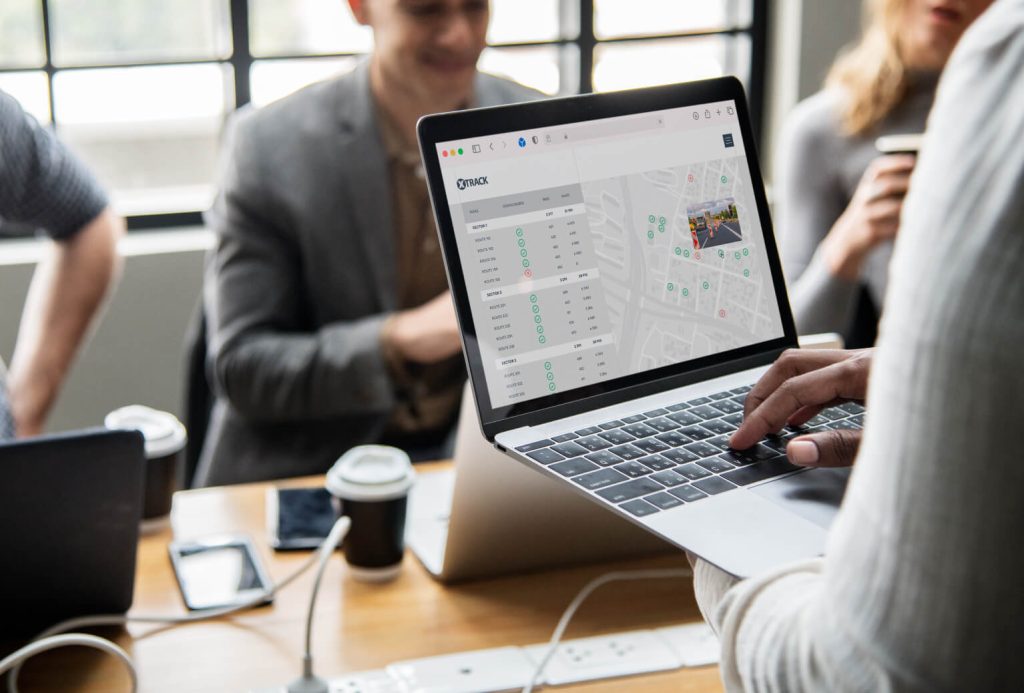
Want to see how our system works?
We’ll show you our platform in practice, using examples relevant to your industry, processes, and field resources.
Contact